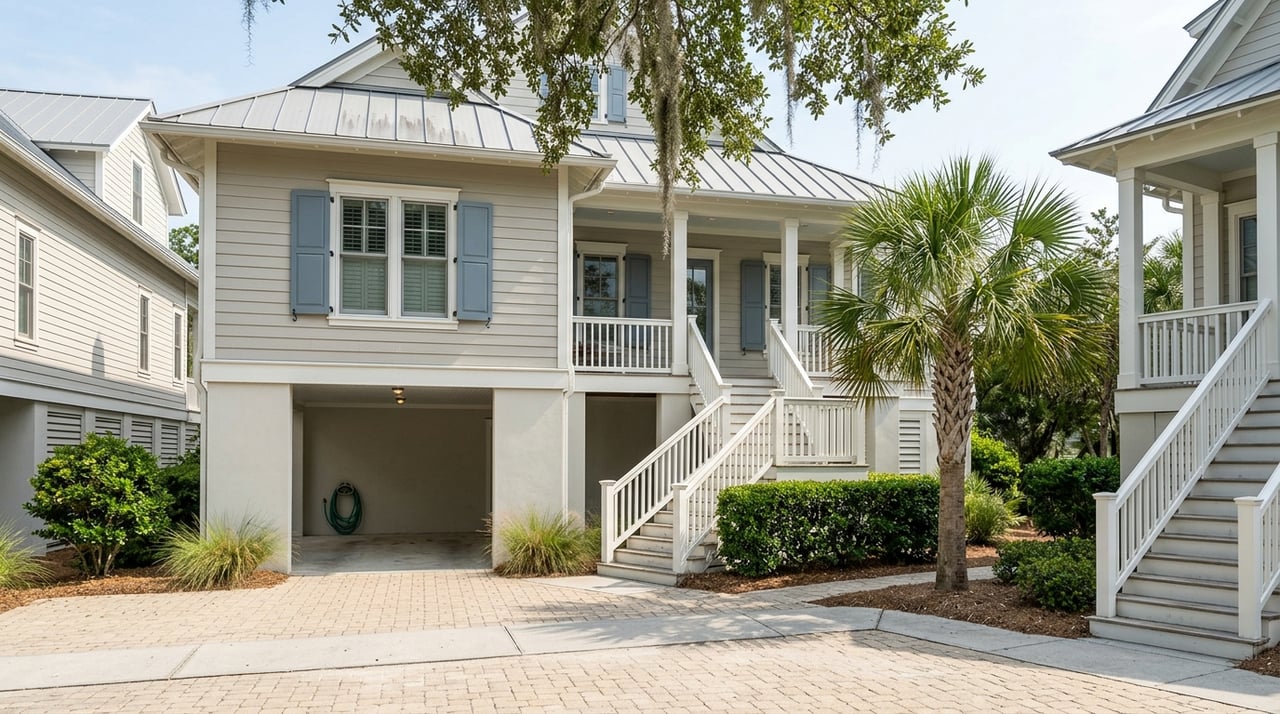
If you are drawn to Isle of Palms, one of the first questions you will run into is simple but important: should you focus inside Wild Dunes or outside it? Both offer a coastal lifestyle, beach access, and island ownership, but they live very differently day to day. Understanding those differences can help you narrow your search, avoid surprises, and choose the part of the island that truly fits how you want to live. Let’s dive in.
Isle of Palms at a Glance
Isle of Palms is a seven-mile barrier island east of Charleston. The west end began residential development in the 1940s, while the eastern end later became the planned development known as Wild Dunes in 1975.
That history still shapes the island today. In broad terms, Wild Dunes is a resort-planned, HOA-governed community, while the rest of Isle of Palms is a mix of city neighborhoods, older beach-home areas, and more public beach infrastructure.
What Makes Wild Dunes Different
Wild Dunes is best understood as a private residential community with a resort presence inside it. The Wild Dunes Community Association is a private, non-profit organization, and all property owners are members.
The community says it includes 2,135 properties. It also says there are 28 regime associations representing more than 1,400 properties, which means some owners may be part of both the master association and a separate neighborhood or condo regime.
That layered structure matters when you buy. You may be reviewing more than one set of rules, fees, and approval processes depending on the property.
Resort community, not just a neighborhood
Wild Dunes has a more structured feel than many other parts of the island. The community includes almost two and one-half miles of Atlantic beachfront and one mile of inlet shoreline, with beach access organized around designated paths.
There is also a strong amenity presence nearby. Wild Dunes Resort currently advertises two 18-hole Tom Fazio golf courses, 12 tennis courts, six pickleball courts, a 10,000-square-foot spa, resort pools, and multiple dining options.
Ownership and resort access are not the same
This is one of the biggest points buyers should know early. Ownership inside Wild Dunes does not automatically include golf, tennis, or resort-pool access.
The community states that those amenities are separate from property ownership. So if club-style access is important to you, it is worth confirming exactly what comes with a specific property and what would require separate arrangements.
What Living Outside Wild Dunes Feels Like
Outside Wild Dunes, Isle of Palms feels broader and less uniform. The city’s comprehensive plan describes detached residential homes as the principal land use, with low- and medium-density dwellings making up much of the island.
You will also see more variation from street to street. Some areas reflect earlier island development, and many neighborhoods include extensive vegetation and open space.
More public-facing beach access
One of the clearest differences is how you get to the beach. Outside Wild Dunes, the city says it offers more than 50 beach access paths, along with two municipal parking lots on Pavilion Drive near Front Beach and public-right-of-way parking in designated beach parking areas.
That can create a more flexible experience if you like moving around the island or using different access points. The city also states that driving on the beach or on beach access paths is strictly prohibited, so beach trips are mainly handled by foot, bike, and parking.
Front Beach brings activity and convenience
The west side of the island also includes the Front Beach commercial district, centered on Ocean Boulevard between 10th and 14th Avenues, with commercial activity also including Palm Boulevard. This part of Isle of Palms concentrates public restrooms, parking, restaurants, and shops.
For some buyers, that public-facing energy is a plus. For others, it means they may prefer a quieter street farther from the main activity nodes.
Home Styles Inside and Outside Wild Dunes
The housing mix is another major difference. Inside Wild Dunes, zoning supports a wide range of property types, including single-family homes, townhouses, and both low-rise and high-rise condominium buildings.
That variety can appeal to buyers looking for different ownership styles, from lock-and-leave condos to larger detached homes. Some neighborhoods also follow approved material and color palettes, which gives parts of Wild Dunes a more coordinated visual character.
Outside Wild Dunes, the housing stock tends to feel more varied. The city notes that many remaining homes on the west end date to the 1940s, while major multi-unit complexes are more concentrated in Front Beach or Wild Dunes.
If design character matters to you, this can be an important distinction. Inside Wild Dunes, you may find a more planned and visually consistent setting. Outside it, you may find a broader range of home ages, styles, and lot settings.
Rules, Reviews, and Renovation Reality
If you are considering Wild Dunes, it is smart to look closely at governance before you fall in love with a property. The governing documents run with the land, and exterior work requires WDCA permits and architectural review board approval.
Some neighborhoods also have distinct approved color themes. That can help preserve a certain look, but it also means you should expect more review before making exterior changes.
City review can still apply
Wild Dunes does not replace the city’s role. The city recognizes the PRD zoning area for Wild Dunes, and for renovations or new construction, the city advises owners to submit to the city and Wild Dunes at the same time because both reviews can take time.
This is especially important for buyers who want to update quickly after closing. A property may offer great potential, but the path to completing changes may involve more steps than expected.
Some properties outside the gates still fall under WDCA
Another detail that surprises buyers is that some properties outside the gates are also governed by WDCA. The city says this includes properties on 53rd to 57th Avenues and parts of 43rd to 45th Avenues.
That is why location alone is not enough. You want to confirm whether a home is subject to city rules only, or city rules plus Wild Dunes governance.
Beach Access and Coastal Conditions
Every part of Isle of Palms shares one reality: this is a barrier island. Shoreline change, storm impacts, and beach management are part of ownership island-wide.
The northeastern end is especially dynamic because of its location near Dewees Inlet. In Wild Dunes, the community notes that the Beachwood East and Seagrove access path is closed due to erosion, and it says the city leads beach renourishment under state permits.
That does not mean one area is automatically better than another. It means buyers should understand that beach conditions, access routes, and shoreline management can change over time on an island like this.
Which Lifestyle Fits You Best?
For many buyers, the real decision comes down to structure versus flexibility. Wild Dunes tends to suit buyers who want a gated resort environment, stronger architectural controls, internal beach access organization, and a more amenity-centered setting.
The rest of Isle of Palms often suits buyers who want a more traditional island-neighborhood feel, more public access points, and a wider mix of house types. Neither choice is universally better. The right fit depends on how you want your daily life to feel once you are here.
Wild Dunes may fit if you want:
- A planned community environment
- HOA structure and architectural oversight
- A broad mix of condos, townhomes, and detached homes
- Organized internal beach access paths
- Close proximity to resort-style amenities
Outside Wild Dunes may fit if you want:
- A more traditional island neighborhood setting
- More public beach access options
- Greater variation in home style and age
- Proximity to Front Beach dining, shops, and public facilities
- A less resort-centered feel
What Buyers Should Confirm Before Making an Offer
No matter which side of the island you prefer, a few questions can make your search much smoother. These details help align the property with your goals before you get too far into the process.
Key questions to ask
- Is the property governed by the city only, or by both the city and WDCA?
- If it is in Wild Dunes, is there also a neighborhood or condo regime?
- What approvals are required for exterior improvements?
- How is beach access handled from this property?
- Is resort amenity access included, separate, or unavailable?
- How close is the home to Front Beach, public parking, or island activity areas?
The Bottom Line on Isle of Palms Living
Inside and outside Wild Dunes, you are still choosing an Isle of Palms lifestyle shaped by the beach, the barrier-island setting, and the character of a coastal community. The difference is how that lifestyle is organized, governed, and experienced day to day.
If you want help comparing streets, property types, HOA structures, or renovation considerations on Isle of Palms, Sarah Ellen Lacke can help you sort through the details and find the island fit that feels right for you.
FAQs
What is the difference between Wild Dunes and the rest of Isle of Palms?
- Wild Dunes is a resort-planned, HOA-governed community with organized internal beach access and a wide mix of property types, while the rest of Isle of Palms is made up of broader city neighborhoods with more public beach infrastructure and a more varied housing stock.
Does owning a home in Wild Dunes include golf or pool access?
- No. The Wild Dunes Community Association states that golf, tennis, and resort-pool access are separate from property ownership.
Are all homes near Wild Dunes governed by the same HOA rules?
- No. Some properties inside Wild Dunes may also belong to a separate neighborhood or condo regime, and some properties outside the gates on certain avenues are also governed by WDCA.
Can you renovate a home in Wild Dunes without approval?
- No. Exterior work requires WDCA permits and architectural review approval, and city review may also be required depending on the project.
How does public beach access work on Isle of Palms outside Wild Dunes?
- The city says there are more than 50 beach access paths, two municipal parking lots near Front Beach, and public-right-of-way parking in designated areas.
Is Isle of Palms affected by erosion and shoreline change?
- Yes. Isle of Palms is a barrier island, so shoreline change, storm impacts, and beach management are part of ownership across the island, with the northeastern end near Dewees Inlet being especially dynamic.